Measles Symptoms: Early Warning Signs, Causes, Treatment, and Prevention

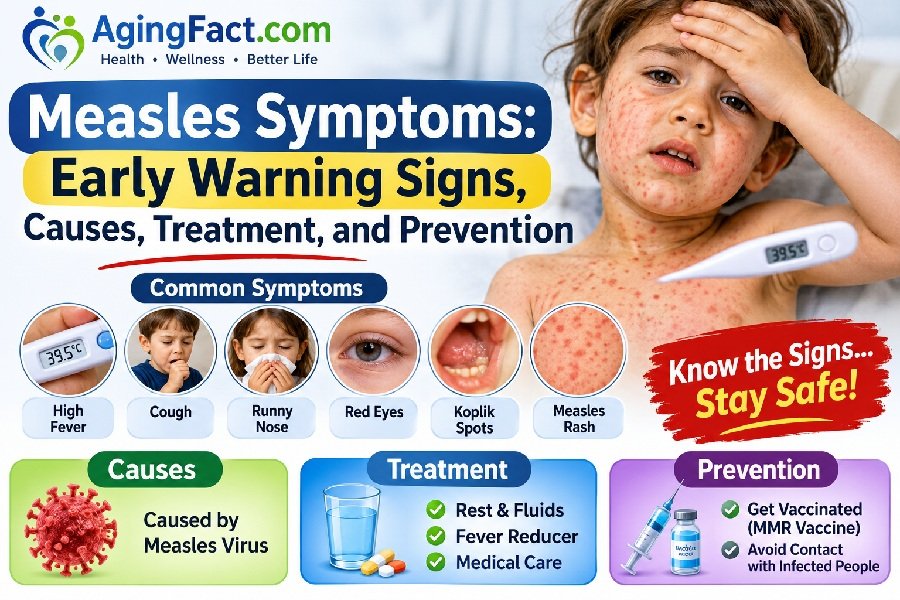
Measles symptoms begin with a fever, runny nose, and watery eyes. Then a characteristic red measles skin rash appears. Measles is a very contagious viral sickness that can affect children and adults, particularly those who don’t get inoculated against it. Knowing the early signs and side effects is significant since measles can some of the time lead to serious health issues.
At AgingFact.com, we strive to provide our perusers with valuable wellbeing care data. With this data, our perusers can be way better educated around common side effects, when to look for restorative care, and how to ensure themselves from an infection.
What Is Measles?
Measles, also known as rubeola, is a infectious viral illness that spreads through the discuss when an tainted person coughs or wheezes. It can stay within the discuss for up to 2 hours. In spite of the fact that measles is commonly seen as a childhood illness, it can happen in individuals of all ages in the event that they are not safe to it. Pregnant ladies, children, and individuals with debilitated safe frameworks are at expanded hazard for complications from measles. The World Health Organization (WHO) states that immunization is the best and most effective way of controlling the spread of measles.
Common Measles Symptoms
The symptoms of measles as a rule show up around 14 days after presentation to the disease. The ailment frequently begins with side effects taking after a respiratory contamination before progressing to a characteristic rash.
Common measles symptoms include:
- High fever that may rise above 104°F (40°C).
- Persistent dry cough.
- Runny nose.
- Red and watery eyes.
- Small white spots inside the mouth.
- A red, blotchy skin rash.
- Tiredness and general weakness.
- Reduced appetite.
Not everyone experiences every symptom’s in the same way. If measles is suspected contact a healthcare professional promptly rather than relying on symptoms alone for diagnosis.
Early Signs of Measles
Early signs of measles should be distinguished as quickly as possible to slow the spread of the infection.
1. High Fever
A measles patient’s first symptoms may be a mild fever, but it can quickly spike to over 101ºF.
2. Cough and Runny Nose
A measles patient may also display cold-like symptoms including a runny nose and persistent cough.
3. Red and Watery Eyes
Eyes may become bloodshot and watery. Some patients report sensitivity to light.
4. White Spots Inside the Mouth
Small white’s or bluish-white spots may appear inside the cheeks often against a red background. These are known as Koplik spots and can be an important’s clinical clue for healthcare professionals.
What Does a Measles Rash Look Like?
The rash appears 3-5 days after the initial symptoms and spreads from head to toe. It is ruddy and blotchy.
The rash begins on the upper body, regularly the confront and the zone close the hairline, and after that spreads down to the neck, the middle, arms and legs. The spots can blend and gotten to be bigger as the rash spreads.
The rash lasts a few days and steadily blurs absent. The fever may final or get indeed more awful as the rash begins to appear.
It is not always possible to identify measles by the rash alone. Other viral illnesses and other skin conditions can also cause a similar rash. Therefore, other medical evaluations are warranted.
How Long Do Measles Symptoms Last?
The symptoms of measles do not occur all at once. They can be grouped into various stages to give an idea of what a person may experience as the illness progresses. The stages and the symptoms that define them can be summarized as below.
| Stage | What Usually Happens |
|---|---|
| 7 to 14 days after the infection | Initial symptoms of illness start to appear |
| 2 to 4 days | Fever and cold-like symptoms appear |
| 3 to 5 days | Rash starts to appear |
| Following the appearance of the rash | Spreads and fades away gradually |
| Recovery | Cough and weakness remain for a period of time after the recovery from the illness. |
Some complications can also occur after the recovery from the initial illness.
What Causes Measles?
Measles is caused by infection with the measles virus. The infection spreads basically through airborne particles and respiratory emissions from an tainted individual.
People may get infected by sharing discuss with somebody who has measles, especially in swarmed indoor settings. An contaminated individual can spread the infection roughly four days some time recently the hasty shows up and four days a while later.
People who have not created insusceptibility through immunization or past contamination are particularly powerless.
Possible Complications of Measles
Although measles is more commonly a mild illness in children and young adults it can cause more serious complications including:
- Pneumonia, an infection of the lungs
- Ear infections and subsequent hearing loss
- Diarrhea and dehydration
- Loss of brain tissue (measles encephalitis) and possible permanent brain damage
- Miscarriage, pre-term delivery and/or low birth weight (if the mother becomes infected while pregnant)
As the following symptoms may also occur with measles, you should consult your physician if:
- There is difficulty breathing
- There is confusion and/or convulsions
- There is extreme drowsiness
- There is seizure
- There is severe dehydration
Treatment for Measles Symptoms
There is no antiviral treatment available for the common measles infection. However, there are various means to treat the symptoms, prevent dehydration and decrease the risk of complications.
Some of these means are:
- Replacing fluids lost from diarrhea and/or vomiting
- Resting
- Eating wholesome food (as tolerated)
- Take a fever reducing medication only when advised to do so
- Go to the doctor if the complications require it
There is evidence that measles infection suppresses the immune system for an extended period of time. For this reason, healthcare professionals may recommend vitamin A to children with measles.
Be sure your child does not take aspirin if he/she is less than 18 years of age.
Prior to going to a healthcare facility with a child who has measles, contact the facility and inform them of your child’s condition so they may protect other children/patients.
How to Prevent Measles
Vaccination is the best way most ideal way to avoid measles. Measles is one of the diseases preventable by immunization with the MMR (measles, mumps and rubella) immunization.
Other ways to anticipate measles incorporate:
- Guaranteeing children get inoculations agreeing to the prescribed plan.
- Avoiding contact with people with measles.
- Taking after open wellbeing bearings, particularly amid an episode of measles.
When Should You See a Doctor?
Contacting the healthcare professional as before long as conceivable after presentation to measles, particularly in the event that you’re an newborn child, pregnant, have a debilitated resistant framework or have not been inoculated against measles.
If you suspect exposure to measles, contact your healthcare supplier as some time recently long as conceivable. You need to search for helpful’s thought as some time recently long as conceivable to stop the illness from spreading’s and to secure yourself from complications.
Conclusion
Understanding measles symptoms can help individuals recognize the early caution signs and look for fitting therapeutic care. Tall fever, hack, runny nose, ruddy eyes, Koplik spots, and a spreading hasty are vital highlights of this disease.
Medical Disclaimer: The information contained in this article is for common data purposes as it were. The data is given by third parties and has not been confirmed or supported by this site and ought to not be depended upon or utilized by the client in any way and isn’t planning nor inferred to be a substitute for proficient restorative exhortation, determination or treatment.